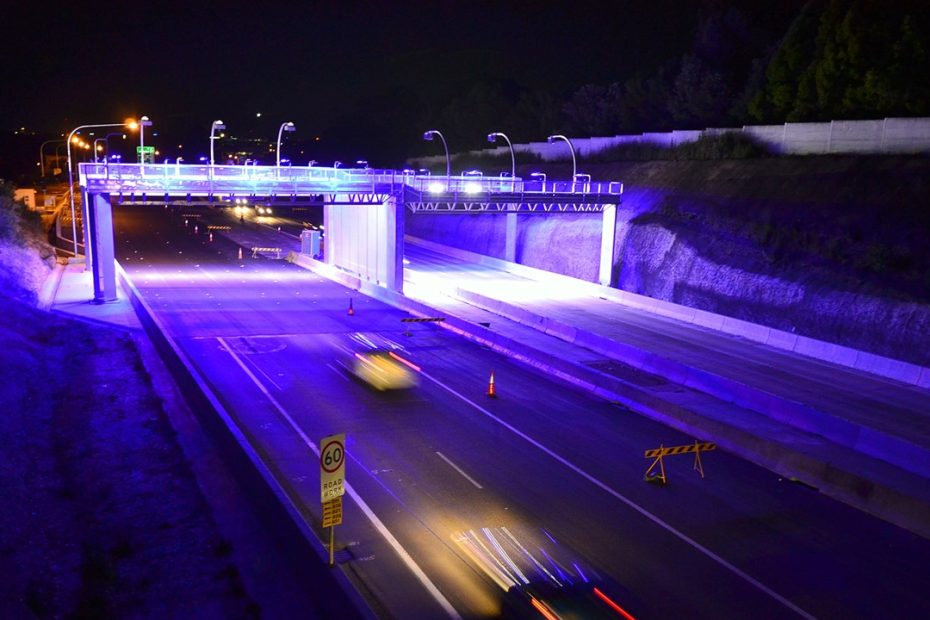
Thirty years ago, a Sydney barrister warned that the M2 Motorway deal would tie north-west Sydney to a private tollroad for decades and make it harder to build public transport. He was right.
In May 1995, two years before the M2 opened, barrister Tim Robertson of Frederick Jordan Chambers wrote a 66-page legal opinion, the M2 Tollway Memorandum of Advice, on the contract behind the motorway. His conclusion was blunt: the deal was probably illegal, and it was designed to stop competition from other forms of transport, including trains.
His advice was never tested in court, as far as we know. But reading it today, it looks less like a legal argument and more like a prediction.
The deal
In 1994, the NSW Government signed a contract with a private company to build and run the M2. The company paid for the road and, in return, got to charge tolls and keep the money to repay its investors.
Robertson raised two big problems.
First, the toll itself. For centuries, the rule has been that only Parliament can make people pay a charge like a tax or a toll. NSW law let the roads authority charge tolls and hire someone to collect them, but the money was supposed to go to the government. The M2 contract let a private company set the toll and keep it. Robertson argued the law didn’t allow this. He added that it put a public power beyond the reach of watchdogs such as the Ombudsman, ICAC and the Auditor-General.
Second, competition. The contract required the government to treat the M2 as the main route for a huge “Northwest Region” stretching from Chatswood to Mt Druitt. It meant:
- the government had to consult the M2 company before approving new public transport in the area, including rail
- if a new road or train line took drivers off the M2, the company could demand compensation or higher tolls
- the M2’s bus lanes couldn’t be converted to light rail without the company’s agreement
Robertson argued this amounted to an illegal attempt to create a monopoly. In plain terms, the government had agreed to pay a penalty if it gave people a better alternative.
The railway that had to be bargained for
For years, the Hills District was one of Sydney’s fastest-growing areas with no railway. A line was promised again and again. A North West Rail Link was announced in 2005 as part of a wider rail expansion plan, then cancelled in 2008 and replaced by a North West Metro, which was cut back in 2009 and cancelled altogether in 2010.
The M2 contract sat quietly in the background. A railway running alongside the M2 was exactly the kind of competition it was written to discourage.
When the government finally committed to the line, it had to deal with the contract first. It did this through a separate deal to widen the motorway. Under the M2 upgrade agreement, which took effect in November 2010, the company funded roughly $546 million of works and was rewarded with a four-year extension to its concession. The terms also included a toll increase.
At the same time, the anti-competition clause was rewritten. Transurban later told NSW Parliament that the M2 contract had contained a clause against competing public transport, and that it was changed as part of the upgrade deal so the North West Rail Link could go ahead.
The line finally opened in 2019 as Sydney Metro Northwest. But the lesson is stark. Before Sydney could build a railway to the north-west, the government had to negotiate with a private tollroad company, and part of the price was more years of tolls for M2 drivers.
The story isn’t over. Transurban has confirmed the M2 contract still includes a “material adverse effect” clause covering other transport options in the north-west, including possible public transport.
The busway that was meant to become light rail
Many Sydneysiders don’t know the M2 was designed with public transport built in. The original plans put a busway in the centre of the motorway, leading to a bus interchange at Epping Station, and built so it could later be converted to light rail.
The idea was sensible: start with buses, then upgrade to light rail once the area grew. But the contract gave the private company a veto. Conversion needed the agreement of the government and the company, and any deal had to cover “tolling arrangements.” Robertson warned that this handed a private tollroad control over public transport on the region’s busiest corridor for 42 years.
Since then, the busway has been chipped away rather than upgraded. Its dedicated bus access ramps were later removed, and bus users report that the Epping bus overpass was lost in the M2 widening because space was needed for another traffic lane. The light rail line the corridor was designed for has never been built.
Can bus lanes become light rail? Ask Ottawa
Yes, and Canada’s capital shows how.
Ottawa opened its bus-only Transitway in 1983 and expanded it to more than fifty stations. By the 2010s the busiest section was full, with buses bumper to bumper, so the city closed parts of it from 2015 and rebuilt them as a light rail line that opened in 2019.
A few lessons for Sydney:
- It works. The Confederation Line was North America’s first conversion of a fully built busway into light rail, and Ottawa is now extending it along more old bus corridors.
- Rail carries more people for less. Ottawa chose rail because trains were far more cost-effective at the passenger numbers it needed.
- Buses can keep running during construction. Ottawa’s contract required that no bus lane be closed until a replacement had been built.
- Plan ahead, or pay later. Ottawa’s stations were designed from the start to be convertible, but the cost of converting has led some to argue that building light rail from day one would have been cheaper overall.
The M2 busway was built with conversion in mind, just like Ottawa’s. The difference is who gets to decide. In Ottawa, it was the public. On the M2, a private contract stands in the way.
Not just the M2
What began with one road is now standard practice. Transurban has told Parliament that all of the NSW tollroads it and its partners operate include undertakings covering future government decisions that have a material adverse effect on the road. The WestConnex contracts contain dedicated sections on compensation events and Material Adverse Effect.
The Cross City Tunnel showed what that can mean. A submission to a parliamentary inquiry warned that, under its contract, good traffic management by the City would come at a cost that couldn’t be calculated in advance, could be punitive, and would discourage government from making proper decisions.
The 2024 Independent Toll Review found much of what Robertson feared. It concluded the toll-setting process had been flawed, key details of the deals hadn’t been disclosed to the public, and tolls were higher than they needed to be. It also flagged that Transurban’s dominance as the only private motorway owner in NSW could be harming competition, and that its market position had increased its political influence.
The government has chosen to negotiate. Reforms finalised in 2026 include toll cuts on the M2, M7, Lane Cove Tunnel and Cross City Tunnel, though they still depend on final agreements and approvals. The long-term contracts remain, and the M2 is fully Transurban-owned and under concession until 2048.
What EcoTransit is calling for
The question Robertson asked in 1995 is still the right one: who decides how Sydney gets around?
When tollroad contracts make it costly to build a train line, upgrade a busway or add a bus route, those choices are partly being made in private agreements the public can’t see. We’re calling on the NSW Government to:
- Publish every tollroad contract in full, including all compensation and “material adverse effect” clauses.
- Ban anti-public-transport clauses in all future road deals. No government should ever again have to buy back the right to build a railway.
- Investigate converting the M2 busway corridor to light rail, and publish what any compensation to the operator would cost.
- Count the hidden cost of old tollroad deals when assessing new rail and bus projects.
- Keep major transport decisions with Parliament, not in private contracts.
The north-west waited more than two decades for its railway, and its light rail-ready busway still carries only buses and cars. Robertson warned it would happen. Let’s make sure it never happens again.